New Year, New Mindset: Why Setting Intentions Instead of Resolutions Creates Lasting Change

Thrive • December 29, 2021

By Thrive Sacramento’s Registered Dietitian Supervisor Kailey Cunningham, MS, RDN, CD

At Thrive, we’re all for self-betterment, but we’re also champions of self-compassion, intuitive approaches, loving yourself as you are, and enjoying the journey — which is why we favor New Year’s intentions over New Year’s resolutions. If you’re hoping to implement personal changes this year, you might want to consider forgoing the rigidity of resolutions and creating intentions rooted in meaning and mindfulness instead. Read on to discover the differences between resolutions and intentions and collect inspiration for your own New Year’s intentions.

THE TROUBLE WITH RESOLUTIONS

Resolutions tend to be influenced by external expectations. They are often harsh and absolute, and fail to acknowledge the intricacies of being human. As such, they generally fail to appreciate steps toward progress that deserve to be rewarded as small successes.

The Harmful Nature of Resolutions to Mental Health 

Akin to a to-do list, resolutions are outcome-driven, narrowly defined, and imply that success or failure are the only possible results. Unlike a to-do list, resolutions typically have perceived high stakes, since they’re meant to be life-changing for the person who attempts to achieve them. With the high stakes of resolutions comes the pressure to be successful, which can actually have a paralyzing rather than inspiring effect. 

Due to their restrictive nature, resolutions can provide individuals with ammunition to engage in negative self-talk, causing them to feel guilty and ashamed — emotions that can impede motivation and be detrimental to mental health. As a result, individuals attempting to follow through with their resolutions may end up experiencing feelings of hopelessness, worthlessness, anxiety, and depression.  

THE POWER OF PURPOSEFUL INTENTIONS

Intentions are centered around a person’s values, driving factors, and internal awareness. By honoring an individual’s purpose behind a desired behavior, intentions provide context that allows the person to truly embody the change they’re navigating toward. Additionally, by encouraging a person to reflect on their mental and emotional state, intentions allow individuals to remain flexible as they gently cultivate change.  

In “The Seven Spiritual Laws of Success,” author Deepak Chopra describes intentions as the driving force of desire, saying, “Intent alone is very powerful because intent is desire without attachment to the outcome.” 

In other words, a person’s intentions are not directly attached to their results. Instead, they support practicing patience with oneself, celebrating successes big and small, and appreciating any lessons learned along the way. Intentions allow for nuance, unpredictability, and the non-linear progression often experienced when fostering change. 

How Intentions Nurture Self-Compassion and Lasting Change

Intentions encourage present moment awareness. A person implementing an intention creates space to acknowledge how they feel and adjust their actions accordingly. Typically, the efforts that feel the best and most authentic nurture the desired change. 

For example, the resolution, “I will go to spin class three days a week” leaves no room for flexibility and can paralyze a person with pressure. By shifting the resolution into an intention such as, “I intend to move my body in ways that feel good,” a person has the freedom to explore, experiment, and modify.

Spin class may become a toxic environment due to an unhelpful instructor. An individual may discover that they don’t actually enjoy spinning. Or, one may discover they are not able to afford a gym or studio membership after all. If any of these challenges arise for a person who intends to move their body in ways that feel good, the individual can consider different kinds of movements while still abiding by their intention.

By framing intentions as experiments with the ultimate purpose of discovering what feels good, you can open yourself up to being present and judgment-free while also facilitating sustainable change. The self-compassionate approach of intentions encourages healthy, happy and confident mindsets. 

FOURTEEN INTENTIONS TO INSPIRE SUSTAINABLE CHANGE IN THE NEW YEAR

When considering your intentions for the new year, keep in mind that they are meant to be short, positive and direct, while aligning with your values and remaining open to different possibilities. Below, discover some examples of intentions that we hope inspire your own. 

  1. I intend to be kind to my body and treat it with love.
  2. I intend to nourish myself with adequate food.
  3. I intend to make space in my life for a partner.
  4. I intend to make space for deepening my relationship with my current partner.
  5. I intend to be present with my feelings. 
  6. I intend to love myself and others. 
  7. I intend to find love in everyone.
  8. I intend to prioritize balance both at work and at home.
  9. I intend to be aware of my surroundings. 
  10. I intend to experience my emotions.
  11. I intend to be open to success.
  12. I intend to create space for success.
  13. I intend to invite healing into my life. 
  14. I intend to embrace vulnerability. 

YOU ARE ENOUGH JUST THE WAY YOU ARE

A new year offers an opportunity to adjust elements of our lives that don’t serve us. This doesn’t mean you shouldn’t keep on loving yourself just as you are, celebrating your successes of all sizes, and making the most of teaching moments along the way. If you’re hoping to turn over a new leaf this year and would like professional guidance, feel free to reach out to us to learn more about Thrive’s therapeutic services. 

About the Author

Thrive Sacramento’s Registered Dietitian Supervisor Kailey Cunningham, MS, RDN, CD

Kailey Cunningham, MS, RDN, CD, is a Registered Dietitian Nutritionist who obtained a Master’s of Dietetics degree from the University of Kentucky after completing both her undergraduate studies in dietetics and accredited dietetic internship at the same university.

She has been a Registered Dietitian Nutritionist since February of 2013 and has been working in the eating disorder field since 2015. Kailey has experience treating clients at many levels of care, from partial hospitalization programming to outpatient, with a variety of diagnoses including anorexia nervosa, bulimia nervosa, binge eating disorder, ARFID and OSFED.

She began working at The Emily Program in Lacey, Washington for three years where she acted as the full-time programming dietitian. While in this position, she worked directly with a lead therapist to develop an adolescent treatment track implementing elements of Family-Based Treatment and gaining invaluable experience working with adolescents and their parents. She then worked at Center for Discovery in Tacoma, Washington while building her nutrition counseling private practice. She began her successful practice in April of 2018 and moved it with her from Olympia, Washington to Rocklin, California in October 2020. Kailey is excited to now be a part of the Sacramento Thrive Wellness team providing support for adult and adolescent clients in intensive outpatient and outpatient levels of care.

Kailey’s primary motivator and true passion is supporting others on their journey to a more peaceful and balanced relationship with food and their bodies. Through individualized nutrition counseling and education, she helps those struggling with eating disorder behaviors, body image issues, food aversion and health anxieties find what is right for them while leaving diet culture behind.

Download our free wellness guide.

Discover the power of small, sustainable changes with "How to Thrive: 10 Simple Habits for Healthy Living." This guide offers practical, easy-to-follow habits that promote physical, mental, and emotional well-being.

By Erin McGinty Fort, MS, MHA, CPC, LPC-S, CEDS-C December 18, 2025
Sometimes, people need more support, structure, and monitoring than the typical outpatient setting can provide. When this happens, the treatment team will usually recommend that someone be "stepped up" to a different level of care, or program, that can better meet their needs. I like to think of it as being similar to medication dosages; people need different strengths of medications, or dosages, to get better when they're sick. Stepping someone up to a higher level of care is like increasing the dosage of a medication to match the severity of their symptoms. How Are Higher Levels of Care Different from Standard Outpatient Care? At the core of differentiating higher levels of care from standard outpatient care is the intensity and structure of the treatment. Higher level of care programs tend to offer more days of treatment each week and more hours of treatment per day than in the outpatient setting. Those in higher level of care programs may also meet with their treatment team members more frequently each week. There are more staff present to support someone at or after meals and snacks, or to help those who are having urges to engage in compulsions or other harmful behaviors. Clients in our HLOC programs get access to an assortment of treatment modalities tailored to their individual needs, including personalized therapy sessions, group support, medication management, medical nutrition therapy with a dietitian, and check-ins with our primary care providers. We support clients with personalized treatment plans and regular assessments to monitor and tweak interventions as needed. Higher levels of care also offer increased peer interaction and support. Intensive programs incorporate additional group therapy sessions, which can help those in treatment feel less alone as well as create a greater sense of community. For some people, it can be difficult to devote the time and energy needed to recover while also balancing other responsibilities like school or work. Stepping up to more intensive levels of care allows people to fully dedicate themselves to recovery. As they get better and make progress, a person may be stepped back down to a less intensive level of care to start practicing their recovery in their usual home, school, or work settings while also receiving professional support from their treatment team. What Levels of Care are Available? At Thrive Wellness, we offer four different levels of care to help clients step up (or down) in their treatment when needed: -  Outpatient Treatment - weekly, bi-weekly, or monthly meetings with a therapist, psychiatrist, primary care provider, and/or dietitian. - Intensive Outpatient Program (IOP) - A minimum of three hours per day, three days per week. - Partial Hospitalization Program (PHP) - A minimum of six hours per day, five days per week. - Residential Treatment - Coming soon in 2026, The Greenhouse at Thrive will offer residential treatment for eating disorders, anxiety disorders, and obsessive-compulsive disorder. This level of care offers 24-hour support for those aged 12-24 living in our residential treatment center. How To Decide Which Level of Care is Right for You If you're unsure which option is right for you or your loved one, we offer a free assessment that can be completed with our admissions team. In this initial assessment, we'll gather information from you about what you're struggling with, speak with our team of providers, and then make a recommendation for what level of care we feel is the best fit for you and your needs. If you’re experiencing symptoms of an eating disorder, anxiety disorder, or other behavioral or mental health challenges, don’t hesitate to reach out. To get started with our intake process, give us a call at 775-525-8103 or fill out this form . We can’t wait to help you Thrive.
December 2, 2025
Like the fir tree, a symbol of endurance rooted in hope, our Family Inclusive Recovery (FIR) approach reflects the strength that grows when families face challenges together. At our new residential center “The Greenhouse”, FIR is more than a treatment model, it’s a philosophy of healing that places families at the heart of recovery for adolescents and young adults navigating eating disorders, anxiety disorders, and obsessive-compulsive disorder (OCD). We believe lasting healing doesn’t happen in isolation; it’s built with the support of families through perseverance, hope, and compassionate care. What Is Family Inclusive Recovery (FIR)? Family Intensive Recovery (FIR) is a specialized and immersive approach that actively engages caregivers as central agents in their child’s healing process. Rather than seeing families as contributors to a problem, we view them as essential partners in recovery. Drawing from two evidence-based frameworks, Supportive Parenting for Anxious Childhood Emotions (SPACE) and Family-Based Treatment (FBT), FIR helps families cultivate resilience, confidence, and connection throughout the journey to recovery. Grounded in SPACE and FBT Through the SPACE model, parents learn how to recognize and reduce well-intentioned but unhelpful behaviors known as accommodations that can reinforce anxiety and OCD symptoms. By shifting from rescuing to supporting and challenging, parents develop the confidence to guide their child through discomfort, helping them build distress tolerance and self-trust. Simultaneously, Family-Based Treatment (FBT) empowers families to take an active, compassionate role in their child’s nutritional and emotional recovery. Parents learn how to support weight and nutritional restoration, disrupt the eating disorder’s patterns, and reestablish boundaries that promote health and growing autonomy. Together, these approaches strengthen both the individual and family system, allowing recovery to take root within an environment of empathy and optimism. From Blame to Collaboration A cornerstone of the FIR model is removing blame. At Thrive, parents are not viewed as the cause of their child’s struggles, but rather as key partners in recovery. Treatment focuses on joining forces to create a safe, supportive environment where: Families learn to sit with their child's discomfort alongside them without rushing to fix or control it. Parents practice compassionate firmness, setting boundaries grounded in care and safety. Teens and caregivers rebuild trust through open, honest communication. This collaborative framework helps families reestablish a sense of connection and confidence, fostering long-term resilience and open communication that extends beyond the treatment setting. Why Family Matters in Recovery Recovery from eating disorders, OCD, or anxiety isn’t a one-person job, it requires integrated care including the family. When families learn to navigate challenges together, they can model emotional regulation, reinforce healthy boundaries, and create conditions for sustained recovery. Through FIR, we aim to strengthen attachment bonds, reshape family interactions, and empower every member of the family to grow. The result is not only symptom reduction but also a deeper sense of unity, hope, and shared endurance, just like the steadfast fir tree that stands resilient through every season. Moving Toward Hope Family Inclusive Recovery invites caregivers and loved ones to become active participants in change. It’s a journey of learning, letting go, and leaning into love and acceptance. Together, families and clinicians can cultivate the courage in clients to face uncertainty, and in doing so, help them discover that recovery is not just possible, but enduring. If you’d like to learn more about Family Intensive Recovery at The Greenhouse or how we support families in eating disorder and OCD treatment, reach out to our team today.
November 14, 2025
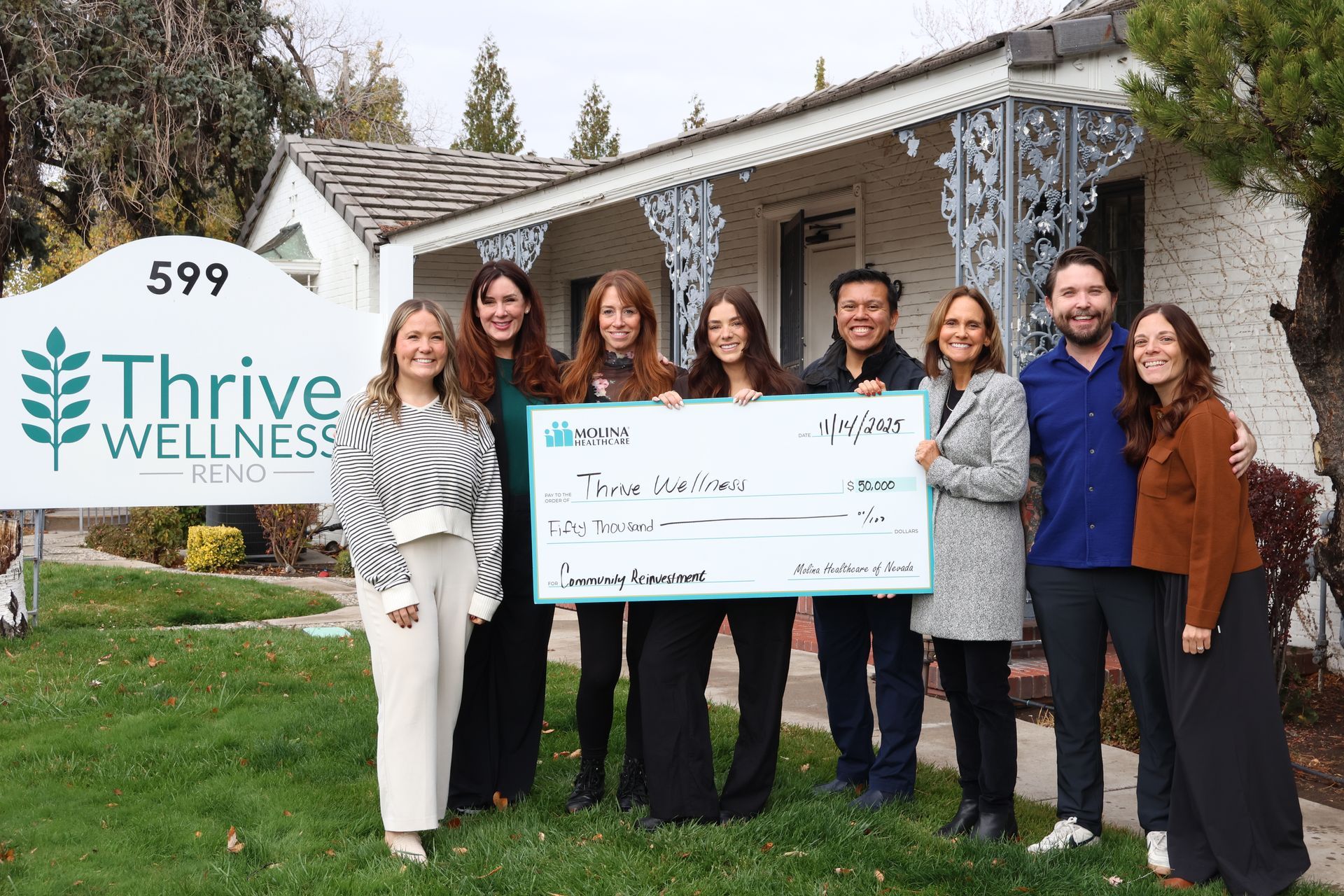
The Greenhouse at Thrive Wellness A New Chapter of Hope and Healing in Nevada On Friday, November 14 , we gathered with our partners at Molina Healthcare to share an important moment for our community. Together, we celebrated Molina’s generous $50,000 grant , an investment that is helping bring The Greenhouse to life. Their support is not only a financial contribution—it’s a statement of belief in the young people and families of Nevada who deserve access to compassionate, evidence-based mental healthcare close to home. This gathering marked the beginning of something we’ve dreamed about for years: a place designed specifically for adolescents and emerging adults to receive the care, connection, and support they need during some of the most vulnerable moments of their lives. Something New Is Growing In early 2026 , Thrive Wellness will open The Greenhouse , Nevada’s first residential treatment center devoted to adolescents and emerging adults navigating eating disorders, anxiety, and OCD . For too long, families have faced a heartbreaking dilemma—send their child far from home for treatment or go without the specialized care they need. The Greenhouse is our answer to that gap. It will be a place where young people can settle into an environment built for healing, where they are understood, supported, and surrounded by a team that believes in their capacity to recover. The Greenhouse represents a natural extension of our mission. It’s a living expression of our belief that recovery is possible—and that with the right support, families can find their footing again. 
More Posts

Start your healing journey today

NEXT STEPS

Are you ready to find hope? We can't wait to connect you with the care you need. To get started with us, please reach out using the link below.   

Obsessive Compulsive Disorder

Learn more →

Perinatal

Mental Health

Learn more →

Obsessive Compulsive Disorder

Learn more →

Perinatal

Mental Health

Learn more →